.svg)

How to Increase Conversion Rates for Real Estate Agents
.webp)
Why Most Real Estate Agents Lose Deals Before They Even Start
The most effective ways to increase conversion rates for real estate agents come down to a handful of structural changes — not buying more leads.
Here's a quick overview of what actually moves the needle:
1. Respond within 5 minutes — Agents who respond within 5 minutes are up to 21x more likely to qualify a lead than those who wait 30 minutes.
2. Follow up at least 5–8 times — 80% of sales require at least 5 follow-up contacts, yet most agents stop after one or two.
3. Use multi-channel outreach — Text, email, and phone together outperform any single channel alone.
4. Segment leads by intent — Not all leads are equal. Prioritize hot prospects while automating nurture for long-term ones.
5. Track your funnel in stages — Measure lead-to-conversation, conversation-to-appointment, and appointment-to-close separately to find where you're losing deals.
6. Optimize before you buy more leads — At 2% conversion, you need 50 leads to close one deal. At 5%, you only need 20.
Here's the uncomfortable truth most agents don't want to hear: the average real estate agent converts somewhere between 0.5% and 2% of their leads into closed deals. That means for every 100 people who raise their hand, 98 or more walk away without ever working with you.
The gap between that number and what's actually possible is enormous. Research shows that roughly 10% of any lead pool will transact within 24 months. Top-producing agents with optimized systems close at 8–15%. Structured teams with dedicated intake roles regularly hit 5–10%.
So where do the deals go? They don't disappear — they close with someone else. Often with another agent who simply followed up one more time, or responded an hour faster, or stayed top of mind through a long nurture cycle while the original agent moved on.
The difference between a struggling agent and a thriving one usually isn't the number of leads they generate. It's the percentage they actually convert. And that percentage is almost entirely a systems problem — not a talent problem.
This guide breaks down exactly how to fix it.
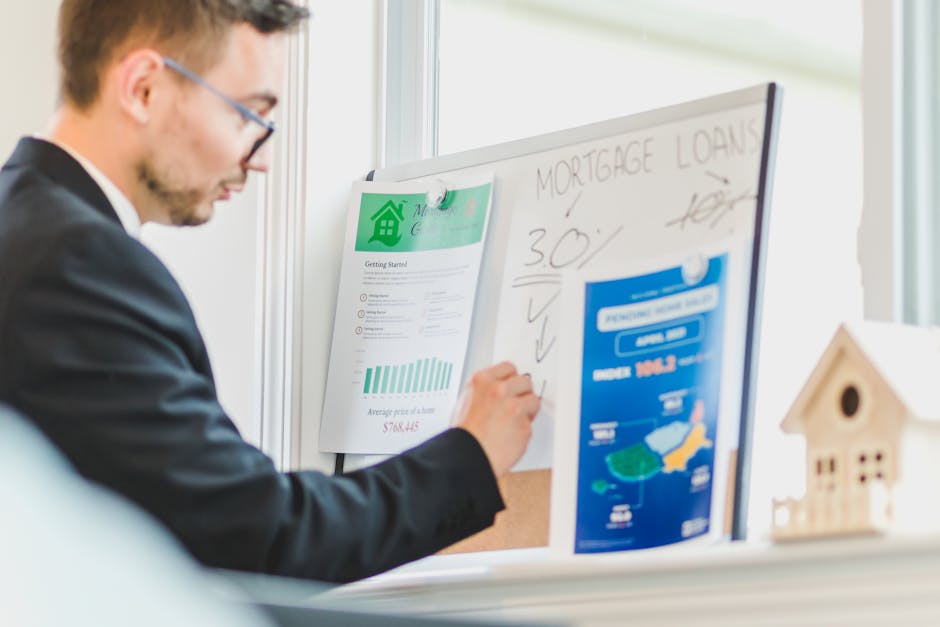
Increase conversion rates for real estate agents terms explained:
• increase conversion rates for moving companies
• increase conversion rates for landscaping companies
• increase conversion rates for plumbing companies
Understanding Real Estate Lead Conversion Benchmarks
To fix your conversion problem, you first need to understand the playing field. In June 2026, the national average real estate lead-to-close conversion rate is 2% to 5% across all lead sources combined. However, this number is heavily skewed by the type of lead you are working with.
The National Association of Realtors recently published that the average conversion rate for cold online leads is actually between 0.5% to 1.2%. This means that for every 200 raw internet leads you capture, you only convert 1 or 2 into a paying customer.
Let's look at how conversion rates break down across the industry by lead source:
• Referrals & SOI — Average Conversion Rate: 15% – 25% — Speed-to-Lead Expectation: Moderate (Within 2–4 hours) — Primary Follow-up Focus: Trust, relationship building, personal check-ins
• Portal Leads (Zillow, Realtor.com) — Average Conversion Rate: 1% – 4% — Speed-to-Lead Expectation: Critical (Under 5 minutes) — Primary Follow-up Focus: Instant qualification, booking live property tours
• Paid Ads (Google PPC, Facebook) — Average Conversion Rate: 1% – 3% — Speed-to-Lead Expectation: Critical (Under 5 minutes) — Primary Follow-up Focus: Intent filtering, long-term multi-channel nurturing
• Organic SEO & Content — Average Conversion Rate: 2% – 5% — Speed-to-Lead Expectation: High (Within 1 hour) — Primary Follow-up Focus: Value-driven content, local neighborhood authority
• Open Houses — Average Conversion Rate: 3% – 5% — Speed-to-Lead Expectation: High (Within 24 hours) — Primary Follow-up Focus: Face-to-face rapport, instant digital follow-up
True Conversion vs. Agent Conversion Rates
There is a massive difference between "true conversion" of a lead pool and an individual agent's conversion rate.
If we look at a random group of 100 people, historical data tells us that an average of 5 of them will purchase a home within any given 12-month period. Over one year, that represents a 5% "true conversion" rate within the general population. If we audit a pool of 5,000 real estate leads over a longer time horizon, we find that roughly 12% of those leads actually convert into a transaction over a 24-month period. Another localized study of 1,144 leads showed that over 12 months, 120 of them had listed or sold a property—nearly 10%.
This means that within your database, about 10% of the people are going to buy or sell a home in the next two years.
If a highly efficient agent is converting at 3%, they are doing well by industry standards. But they are still missing out on the other 7% of people in their database who are buying or selling with someone else. Most agents assume that if a lead doesn't convert in the first 30 to 90 days, it's a "bad lead." In reality, the lead was highly convertible—just on a 12-to-24-month timeline. To capture this hidden revenue, you must learn how to Increase Conversion Rates by playing the long game.
The Financial Impact of Conversion Optimization
Most agents believe the fastest path to doubling their income is doubling their lead flow. But generating more leads into a broken follow-up system only increases your marketing waste and accelerates burnout.
Let's look at the math. Imagine you generate 100 leads per month, and your average commission per closing is $8,000.
• Scenario A (Average Agent - 2% Conversion): You close 2 deals per month. Your monthly Gross Commission Income (GCI) is $16,000. Your cost-per-acquisition (CPA) is high because you are throwing away 98% of your leads.
• Scenario B (Optimized Agent - 5% Conversion): By improving your speed-to-lead and structured follow-up, you close 5 deals from those same 100 leads. Your monthly GCI jumps to $40,000.
• Scenario C (Top Performer - 7% Conversion): With a fully automated, multi-channel nurture system, you close 7 deals. Your monthly GCI is now $56,000.
By improving your close rate from 3% to 7% on those same 100 monthly leads, you increase your annual revenue by over $384,000—without spending a single extra dollar on lead generation.
Proven Strategies to Increase Conversion Rates for Real Estate Agents
Improving your conversion rates requires moving five distinct levers: speed, consistency, channel variety, qualification, and segmentation. When you optimize these levers, you build a system where no lead is ignored or forgotten.
Optimizing Existing Lead Sources vs. Buying More Volume
Before you pull out your credit card to buy more portal leads or launch another social media ad campaign, look at your existing database. The primary constraint holding most agents back is not lead volume—it is lead waste.
When you buy more leads without fixing your follow-up infrastructure, your cost-per-acquisition skyrockets. A 3% conversion rate on a $150 portal lead yields the exact same customer acquisition cost as a 1% conversion rate on a $50 social media lead. The difference is that the agent converting at 3% is running a highly efficient, highly profitable business, while the agent converting at 1% is working three times as hard to manage a bloated, messy database.
Optimizing your existing database is the highest-ROI activity in your business. It costs almost nothing to re-engage past leads, but the payoff of turning a "dead" lead into a closed transaction is pure profit.
How Top-Producing Agents Structure Their Systems
If you look at structured real estate teams, they average 5% to 10% conversion rates, significantly outperforming solo agents who typically fall in the 1.5% to 3% range.
Why is this? It's not because team leaders are better salespeople. It is because of role specialization.
Teams use dedicated Inside Sales Agents (ISAs) or automated intake systems whose sole job is to respond to new inquiries within seconds, qualify them, and hand them off to a field agent. Solo agents, on the other hand, are trying to do everything at once. They are showing homes, negotiating inspections, writing contracts, and trying to return lead calls from their car.
To compete with structured teams, solo agents must use technology to replicate this intake role. You need an automated system that handles the initial "speed-to-lead" qualification and appointment booking so you can focus on what you do best: building face-to-face relationships and closing deals.
Speed-to-Lead and the Role of Automation
If you do not contact an online lead within the first few minutes, your chances of ever doing business with them drop off a cliff. Consumers expect immediate gratification. If they fill out a form on your website and you don't respond right away, they will simply click on the next agent's site.
Why Speed-to-Lead is the Ultimate Way to Increase Conversion Rates for Real Estate Agents
The statistics around response times are stark:
• Responding within 5 minutes of a lead inquiry increases your contact rates by up to 10x compared to a 30-minute delay.
• You are up to 21x more likely to qualify a lead if you respond within 5 minutes compared to waiting 30 minutes.
• After 15 minutes, contact rates begin declining rapidly.
• After 1 hour, the probability of having a meaningful engagement drops by over 60%.
To see how dramatic this impact can be, look at a real-world case study of a residential agent in Phoenix. She was struggling with a manual response time that averaged 47 minutes, resulting in over 120 lost leads per month. She overhauled her business by deploying an automated system that responded to new inquiries in just 11 seconds, 24/7.
The results over 90 days were staggering:
• Leads contacted within 60 seconds rose from 12% to 94%.
• Monthly meaningful conversations increased from 38 to 127 (a 234% increase).
• Her Gross Commission Income (GCI) tripled from $62,000 to $204,000 in 90 days.
• Her effective cost per closing dropped from $3,800 to $1,100—a 71% reduction.
This agent didn't buy more leads or work longer hours. She simply closed her "speed-to-lead" gap. To learn how to build this kind of responsiveness into your business, check out our Instant Lead Response Guide.
For solo agents, trying to maintain a sub-5-minute response time manually is a recipe for burnout. This is where an AI Lead Manager Complete Guide becomes invaluable, allowing you to automate the initial outreach so you never miss a midnight inquiry again.
Balancing AI Automation with the Human Touch
While speed is critical, pure automation can feel cold and robotic if it is not handled correctly. The goal of using AI is not to replace the agent; it is to start a conversation that the agent can step into.
The ideal workflow combines rapid AI responsiveness with a seamless transition to a human. When a lead registers, an AI system instantly sends a personalized, conversational text message designed to get a reply. Once the lead responds with high-intent signals (e.g., "I want to view this home tomorrow at 5 PM"), the system should instantly notify you so you can take over.
This is known as a "human handoff." By combining the speed of AI with the warmth of a real human agent, you provide an exceptional customer experience. To set this up in your business, follow our Human Handoff Feature Complete Guide.
Building a Systematic Follow-Up and Nurture Engine
Most real estate leads do not buy a home the day they register. In fact, many online buyer leads are 6 to 18 months away from making a purchase. Yet, most agents stop following up after the first week. Research shows that 80% of sales require at least 5 follow-up contacts, but the average agent only makes 1 or 2 attempts before giving up.
To capture these long-cycle buyers and sellers, you need a structured, multi-channel follow-up system. You can learn how to build one in our Automated Lead Engagement Follow Up Guide.
Leveraging Multi-Channel Nurturing to Increase Conversion Rates for Real Estate Agents
If you only follow up via email, you are missing the vast majority of your audience. Some people prefer text messages, others want a phone call, and some will only respond to a direct message on social media.
A high-converting follow-up sequence rotates through multiple channels over a 7-to-14-day period:
• Day 1: Instant text response + personal email follow-up.
• Day 2: Phone call + voicemail if they don't answer.
• Day 3: A conversational text message asking a low-pressure question (e.g., "Are you looking for a home with a yard, or is a low-maintenance townhouse more your style?").
• Day 5: A value-add email containing a market report or a list of recently sold homes in their target neighborhood.
• Day 7: A brief "close-the-loop" text message (e.g., "Should I keep an eye out for homes in this area, or would you prefer I pause for now?").
By spreading your outreach across different channels, you meet the consumer where they are comfortable. For a complete blueprint on capturing and managing these leads across channels, read our Multi-Channel Lead Capture Guide.
Lead Segmentation and Intent-Based Prioritization
You cannot treat a lead who wants to buy a home this weekend the same way you treat an investor who is casually browsing properties for next year. To maximize your efficiency, you must segment your database early.
We recommend categorizing your leads into four simple buckets:
1. Hot (0–3 Months): Ready to transact immediately. These leads require high-touch, personal daily or weekly communication.
2. Warm (3–6 Months): Planning to move soon but waiting on financing, a job transfer, or a home sale. Follow up every 2 weeks.
3. Long-Term (6+ Months): Early in the research phase. Automate this nurture with monthly market updates and neighborhood reports.
4. Not Ready / Archive: Unresponsive leads. Keep them on a low-frequency automated drip so you stay top of mind when their timeline changes.
By scoring your leads based on their online behavior—such as how many times they view a specific property or open your emails—you can focus your energy on the highest-intent prospects. To learn how to automate this scoring process, read our AI Lead Scoring Home Services Complete Guide.
How to Measure and Track Your Conversion Funnel
If you don't measure your conversion metrics, you cannot improve them. You must treat your real estate business like an athlete treats their performance: track your data daily to find exactly where your pipeline is leaking.
Key Metrics to Identify Pipeline Bottlenecks
Instead of tracking a single, generic "conversion rate," break your sales funnel down into four distinct stages:
1. Lead-to-Conversation Rate: Of the raw leads you capture, what percentage do you actually have a meaningful conversation with? (If this is low, your speed-to-lead or contact methods are failing).
2. Conversation-to-Appointment Rate: Of the people you speak with, how many agree to an appointment? (If this is low, your qualification scripts or value proposition need work).
3. Appointment-to-Client Rate: How many appointments convert into signed buyer broker agreements or listing contracts? (If this is low, your presentation or trust-building is falling short).
4. Client-to-Close Rate: How many signed clients actually cross the finish line to a closed transaction? (If this is low, you are likely working with unqualified buyers or struggling with transaction management).
By separating these metrics, you can pinpoint your exact bottleneck. For example, if you have a 90% contact rate but only a 5% appointment booking rate, you don't have a lead problem—you have a conversation problem.
To streamline this process and automate your scheduling, you can use AI Powered Appointment Booking to let leads self-schedule tours directly onto your calendar.
A Step-by-Step Action Plan for Solo Agents and Teams
To build a repeatable, high-converting real estate business without burning out, follow this step-by-step implementation plan:
• Step 1: Consolidate your database. Stop keeping leads in spreadsheets, text threads, and sticky notes. Route every single lead source into a single CRM of record.
• Step 2: Automate your first touch. Set up instant SMS and email triggers to respond to every incoming lead in under 60 seconds.
• Step 3: Define your qualifying questions. When you connect with a lead, don't try to sell yourself. Ask simple, open-ended questions about their timeline, motivation, and current situation (e.g., "Are you currently working with an agent?" or "Have you spoken with a lender yet?").
• Step 4: Build your 90-day nurture sequence. Set up a multi-channel drip campaign that automatically sends value-driven content to leads who aren't ready to buy today.
• Step 5: Review your numbers weekly. Spend 15 minutes every Sunday analyzing your conversion rates at each stage of your funnel to find where you need to adjust.
Frequently Asked Questions about Real Estate Conversion
What is a realistic average conversion rate for online real estate leads?
For cold online leads generated from search engines or social media ads, a realistic average conversion rate is 1% to 3%. Top-performing agents who use automated speed-to-lead tools and disciplined follow-up systems can achieve 5% to 8% close rates on these same lead sources.
How many times should an agent follow up with a lead before stopping?
You should make at least 8 to 12 contact attempts within the first 14 days before moving a lead to a long-term nurture sequence. For cold or unresponsive leads, you should never stop following up entirely; instead, transition them to a low-frequency, automated monthly email or text drip for at least 12 to 24 months, as 12% of leads convert over a two-year horizon.
Why do referral leads convert so much higher than portal leads?
Referral leads convert at 15% to 25% because of "trust proximity." The lead already trusts the person who referred you, which means that trust is instantly transferred to you. Portal leads, by contrast, have zero relationship with you when they register; they are looking at a property, not an agent, meaning you must build trust from scratch.
Conclusion
To increase conversion rates for real estate agents, you don't need to spend thousands of dollars buying more leads. You simply need to build a system that stops letting your existing leads slip through the cracks. By focusing on sub-5-minute response times, leveraging multi-channel follow-up, and segmenting your database by intent, you can easily double your transaction volume using the exact same lead flow you have today.
At Onepath, we provide the ultimate AI Lead Manager and all-in-one CRM designed to help you automate this entire process. We instantly respond to your real estate leads, schedule property tours on your calendar, and personalizes interactions across text, email, and voice. With our 72-hour setup, full customer journey visibility, and 24/7 human support, we ensure you never lose a lead to a competitor again.
Ready to turn your database into a high-yielding commission engine? Explore our AI Lead Management Solutions today.

Why Most Real Estate Agents Lose Deals Before They Even Start
The most effective ways to increase conversion rates for real estate agents come down to a handful of structural changes — not buying more leads.
Here's a quick overview of what actually moves the needle:
- Respond within 5 minutes — Agents who respond within 5 minutes are up to 21x more likely to qualify a lead than those who wait 30 minutes.
- Follow up at least 5–8 times — 80% of sales require at least 5 follow-up contacts, yet most agents stop after one or two.
- Use multi-channel outreach — Text, email, and phone together outperform any single channel alone.
- Segment leads by intent — Not all leads are equal. Prioritize hot prospects while automating nurture for long-term ones.
- Track your funnel in stages — Measure lead-to-conversation, conversation-to-appointment, and appointment-to-close separately to find where you're losing deals.
- Optimize before you buy more leads — At 2% conversion, you need 50 leads to close one deal. At 5%, you only need 20.
Here's the uncomfortable truth most agents don't want to hear: the average real estate agent converts somewhere between 0.5% and 2% of their leads into closed deals. That means for every 100 people who raise their hand, 98 or more walk away without ever working with you.
The gap between that number and what's actually possible is enormous. Research shows that roughly 10% of any lead pool will transact within 24 months. Top-producing agents with optimized systems close at 8–15%. Structured teams with dedicated intake roles regularly hit 5–10%.
So where do the deals go? They don't disappear — they close with someone else. Often with another agent who simply followed up one more time, or responded an hour faster, or stayed top of mind through a long nurture cycle while the original agent moved on.
The difference between a struggling agent and a thriving one usually isn't the number of leads they generate. It's the percentage they actually convert. And that percentage is almost entirely a systems problem — not a talent problem.
This guide breaks down exactly how to fix it.
Increase conversion rates for real estate agents terms explained:
- increase conversion rates for moving companies
- increase conversion rates for landscaping companies
- increase conversion rates for plumbing companies
Understanding Real Estate Lead Conversion Benchmarks
To fix your conversion problem, you first need to understand the playing field. In June 2026, the national average real estate lead-to-close conversion rate is 2% to 5% across all lead sources combined. However, this number is heavily skewed by the type of lead you are working with.
The National Association of Realtors recently published that the average conversion rate for cold online leads is actually between 0.5% to 1.2%. This means that for every 200 raw internet leads you capture, you only convert 1 or 2 into a paying customer.
Let's look at how conversion rates break down across the industry by lead source:
| Lead Source | Average Conversion Rate | Speed-to-Lead Expectation | Primary Follow-up Focus |
|---|---|---|---|
| Referrals & SOI | 15% – 25% | Moderate (Within 2–4 hours) | Trust, relationship building, personal check-ins |
| Portal Leads (Zillow, Realtor.com) | 1% – 4% | Critical (Under 5 minutes) | Instant qualification, booking live property tours |
| Paid Ads (Google PPC, Facebook) | 1% – 3% | Critical (Under 5 minutes) | Intent filtering, long-term multi-channel nurturing |
| Organic SEO & Content | 2% – 5% | High (Within 1 hour) | Value-driven content, local neighborhood authority |
| Open Houses | 3% – 5% | High (Within 24 hours) | Face-to-face rapport, instant digital follow-up |
True Conversion vs. Agent Conversion Rates
There is a massive difference between "true conversion" of a lead pool and an individual agent's conversion rate.
If we look at a random group of 100 people, historical data tells us that an average of 5 of them will purchase a home within any given 12-month period. Over one year, that represents a 5% "true conversion" rate within the general population. If we audit a pool of 5,000 real estate leads over a longer time horizon, we find that roughly 12% of those leads actually convert into a transaction over a 24-month period. Another localized study of 1,144 leads showed that over 12 months, 120 of them had listed or sold a property—nearly 10%.
This means that within your database, about 10% of the people are going to buy or sell a home in the next two years.
If a highly efficient agent is converting at 3%, they are doing well by industry standards. But they are still missing out on the other 7% of people in their database who are buying or selling with someone else. Most agents assume that if a lead doesn't convert in the first 30 to 90 days, it's a "bad lead." In reality, the lead was highly convertible—just on a 12-to-24-month timeline. To capture this hidden revenue, you must learn how to Increase Conversion Rates by playing the long game.
The Financial Impact of Conversion Optimization
Most agents believe the fastest path to doubling their income is doubling their lead flow. But generating more leads into a broken follow-up system only increases your marketing waste and accelerates burnout.
Let's look at the math. Imagine you generate 100 leads per month, and your average commission per closing is $8,000.
- Scenario A (Average Agent - 2% Conversion): You close 2 deals per month. Your monthly Gross Commission Income (GCI) is $16,000. Your cost-per-acquisition (CPA) is high because you are throwing away 98% of your leads.
- Scenario B (Optimized Agent - 5% Conversion): By improving your speed-to-lead and structured follow-up, you close 5 deals from those same 100 leads. Your monthly GCI jumps to $40,000.
- Scenario C (Top Performer - 7% Conversion): With a fully automated, multi-channel nurture system, you close 7 deals. Your monthly GCI is now $56,000.
By improving your close rate from 3% to 7% on those same 100 monthly leads, you increase your annual revenue by over $384,000—without spending a single extra dollar on lead generation.
Proven Strategies to Increase Conversion Rates for Real Estate Agents
Improving your conversion rates requires moving five distinct levers: speed, consistency, channel variety, qualification, and segmentation. When you optimize these levers, you build a system where no lead is ignored or forgotten.
Optimizing Existing Lead Sources vs. Buying More Volume
Before you pull out your credit card to buy more portal leads or launch another social media ad campaign, look at your existing database. The primary constraint holding most agents back is not lead volume—it is lead waste.
When you buy more leads without fixing your follow-up infrastructure, your cost-per-acquisition skyrockets. A 3% conversion rate on a $150 portal lead yields the exact same customer acquisition cost as a 1% conversion rate on a $50 social media lead. The difference is that the agent converting at 3% is running a highly efficient, highly profitable business, while the agent converting at 1% is working three times as hard to manage a bloated, messy database.
Optimizing your existing database is the highest-ROI activity in your business. It costs almost nothing to re-engage past leads, but the payoff of turning a "dead" lead into a closed transaction is pure profit.
How Top-Producing Agents Structure Their Systems
If you look at structured real estate teams, they average 5% to 10% conversion rates, significantly outperforming solo agents who typically fall in the 1.5% to 3% range.
Why is this? It's not because team leaders are better salespeople. It is because of role specialization.
Teams use dedicated Inside Sales Agents (ISAs) or automated intake systems whose sole job is to respond to new inquiries within seconds, qualify them, and hand them off to a field agent. Solo agents, on the other hand, are trying to do everything at once. They are showing homes, negotiating inspections, writing contracts, and trying to return lead calls from their car.
To compete with structured teams, solo agents must use technology to replicate this intake role. You need an automated system that handles the initial "speed-to-lead" qualification and appointment booking so you can focus on what you do best: building face-to-face relationships and closing deals.
Speed-to-Lead and the Role of Automation
If you do not contact an online lead within the first few minutes, your chances of ever doing business with them drop off a cliff. Consumers expect immediate gratification. If they fill out a form on your website and you don't respond right away, they will simply click on the next agent's site.
Why Speed-to-Lead is the Ultimate Way to Increase Conversion Rates for Real Estate Agents
The statistics around response times are stark:
- Responding within 5 minutes of a lead inquiry increases your contact rates by up to 10x compared to a 30-minute delay.
- You are up to 21x more likely to qualify a lead if you respond within 5 minutes compared to waiting 30 minutes.
- After 15 minutes, contact rates begin declining rapidly.
- After 1 hour, the probability of having a meaningful engagement drops by over 60%.
To see how dramatic this impact can be, look at a real-world case study of a residential agent in Phoenix. She was struggling with a manual response time that averaged 47 minutes, resulting in over 120 lost leads per month. She overhauled her business by deploying an automated system that responded to new inquiries in just 11 seconds, 24/7.
The results over 90 days were staggering:
- Leads contacted within 60 seconds rose from 12% to 94%.
- Monthly meaningful conversations increased from 38 to 127 (a 234% increase).
- Her Gross Commission Income (GCI) tripled from $62,000 to $204,000 in 90 days.
- Her effective cost per closing dropped from $3,800 to $1,100—a 71% reduction.
This agent didn't buy more leads or work longer hours. She simply closed her "speed-to-lead" gap. To learn how to build this kind of responsiveness into your business, check out our Instant Lead Response Guide.
For solo agents, trying to maintain a sub-5-minute response time manually is a recipe for burnout. This is where an AI Lead Manager Complete Guide becomes invaluable, allowing you to automate the initial outreach so you never miss a midnight inquiry again.
Balancing AI Automation with the Human Touch
While speed is critical, pure automation can feel cold and robotic if it is not handled correctly. The goal of using AI is not to replace the agent; it is to start a conversation that the agent can step into.
The ideal workflow combines rapid AI responsiveness with a seamless transition to a human. When a lead registers, an AI system instantly sends a personalized, conversational text message designed to get a reply. Once the lead responds with high-intent signals (e.g., "I want to view this home tomorrow at 5 PM"), the system should instantly notify you so you can take over.
This is known as a "human handoff." By combining the speed of AI with the warmth of a real human agent, you provide an exceptional customer experience. To set this up in your business, follow our Human Handoff Feature Complete Guide.
Building a Systematic Follow-Up and Nurture Engine
Most real estate leads do not buy a home the day they register. In fact, many online buyer leads are 6 to 18 months away from making a purchase. Yet, most agents stop following up after the first week. Research shows that 80% of sales require at least 5 follow-up contacts, but the average agent only makes 1 or 2 attempts before giving up.
To capture these long-cycle buyers and sellers, you need a structured, multi-channel follow-up system. You can learn how to build one in our Automated Lead Engagement Follow Up Guide.
Leveraging Multi-Channel Nurturing to Increase Conversion Rates for Real Estate Agents
If you only follow up via email, you are missing the vast majority of your audience. Some people prefer text messages, others want a phone call, and some will only respond to a direct message on social media.
A high-converting follow-up sequence rotates through multiple channels over a 7-to-14-day period:
- Day 1: Instant text response + personal email follow-up.
- Day 2: Phone call + voicemail if they don't answer.
- Day 3: A conversational text message asking a low-pressure question (e.g., "Are you looking for a home with a yard, or is a low-maintenance townhouse more your style?").
- Day 5: A value-add email containing a market report or a list of recently sold homes in their target neighborhood.
- Day 7: A brief "close-the-loop" text message (e.g., "Should I keep an eye out for homes in this area, or would you prefer I pause for now?").
By spreading your outreach across different channels, you meet the consumer where they are comfortable. For a complete blueprint on capturing and managing these leads across channels, read our Multi-Channel Lead Capture Guide.
Lead Segmentation and Intent-Based Prioritization
You cannot treat a lead who wants to buy a home this weekend the same way you treat an investor who is casually browsing properties for next year. To maximize your efficiency, you must segment your database early.
We recommend categorizing your leads into four simple buckets:
- Hot (0–3 Months): Ready to transact immediately. These leads require high-touch, personal daily or weekly communication.
- Warm (3–6 Months): Planning to move soon but waiting on financing, a job transfer, or a home sale. Follow up every 2 weeks.
- Long-Term (6+ Months): Early in the research phase. Automate this nurture with monthly market updates and neighborhood reports.
- Not Ready / Archive: Unresponsive leads. Keep them on a low-frequency automated drip so you stay top of mind when their timeline changes.
By scoring your leads based on their online behavior—such as how many times they view a specific property or open your emails—you can focus your energy on the highest-intent prospects. To learn how to automate this scoring process, read our AI Lead Scoring Home Services Complete Guide.
How to Measure and Track Your Conversion Funnel
If you don't measure your conversion metrics, you cannot improve them. You must treat your real estate business like an athlete treats their performance: track your data daily to find exactly where your pipeline is leaking.
Key Metrics to Identify Pipeline Bottlenecks
Instead of tracking a single, generic "conversion rate," break your sales funnel down into four distinct stages:
- Lead-to-Conversation Rate: Of the raw leads you capture, what percentage do you actually have a meaningful conversation with? (If this is low, your speed-to-lead or contact methods are failing).
- Conversation-to-Appointment Rate: Of the people you speak with, how many agree to an appointment? (If this is low, your qualification scripts or value proposition need work).
- Appointment-to-Client Rate: How many appointments convert into signed buyer broker agreements or listing contracts? (If this is low, your presentation or trust-building is falling short).
- Client-to-Close Rate: How many signed clients actually cross the finish line to a closed transaction? (If this is low, you are likely working with unqualified buyers or struggling with transaction management).
By separating these metrics, you can pinpoint your exact bottleneck. For example, if you have a 90% contact rate but only a 5% appointment booking rate, you don't have a lead problem—you have a conversation problem.
To streamline this process and automate your scheduling, you can use AI Powered Appointment Booking to let leads self-schedule tours directly onto your calendar.
A Step-by-Step Action Plan for Solo Agents and Teams
To build a repeatable, high-converting real estate business without burning out, follow this step-by-step implementation plan:
- Step 1: Consolidate your database. Stop keeping leads in spreadsheets, text threads, and sticky notes. Route every single lead source into a single CRM of record.
- Step 2: Automate your first touch. Set up instant SMS and email triggers to respond to every incoming lead in under 60 seconds.
- Step 3: Define your qualifying questions. When you connect with a lead, don't try to sell yourself. Ask simple, open-ended questions about their timeline, motivation, and current situation (e.g., "Are you currently working with an agent?" or "Have you spoken with a lender yet?").
- Step 4: Build your 90-day nurture sequence. Set up a multi-channel drip campaign that automatically sends value-driven content to leads who aren't ready to buy today.
- Step 5: Review your numbers weekly. Spend 15 minutes every Sunday analyzing your conversion rates at each stage of your funnel to find where you need to adjust.
Frequently Asked Questions about Real Estate Conversion
What is a realistic average conversion rate for online real estate leads?
For cold online leads generated from search engines or social media ads, a realistic average conversion rate is 1% to 3%. Top-performing agents who use automated speed-to-lead tools and disciplined follow-up systems can achieve 5% to 8% close rates on these same lead sources.
How many times should an agent follow up with a lead before stopping?
You should make at least 8 to 12 contact attempts within the first 14 days before moving a lead to a long-term nurture sequence. For cold or unresponsive leads, you should never stop following up entirely; instead, transition them to a low-frequency, automated monthly email or text drip for at least 12 to 24 months, as 12% of leads convert over a two-year horizon.
Why do referral leads convert so much higher than portal leads?
Referral leads convert at 15% to 25% because of "trust proximity." The lead already trusts the person who referred you, which means that trust is instantly transferred to you. Portal leads, by contrast, have zero relationship with you when they register; they are looking at a property, not an agent, meaning you must build trust from scratch.
Conclusion
To increase conversion rates for real estate agents, you don't need to spend thousands of dollars buying more leads. You simply need to build a system that stops letting your existing leads slip through the cracks. By focusing on sub-5-minute response times, leveraging multi-channel follow-up, and segmenting your database by intent, you can easily double your transaction volume using the exact same lead flow you have today.
At Onepath, we provide the ultimate AI Lead Manager and all-in-one CRM designed to help you automate this entire process. We instantly respond to your real estate leads, schedule property tours on your calendar, and personalizes interactions across text, email, and voice. With our 72-hour setup, full customer journey visibility, and 24/7 human support, we ensure you never lose a lead to a competitor again.
Ready to turn your database into a high-yielding commission engine? Explore our AI Lead Management Solutions today.
Boost Your Lead Conversions. Start Using Onepath Today.
Onepath is your AI Lead Manager, built by tech experts and home service pros. It responds instantly, schedules appointments, personalizes customer interactions, and ensures no lead slips through the cracks—backed by 24/7 human support.
[ Schedule Discovery call ].webp)